

Local Angle: Writing Blurbs for Scottish and UK Regional Book Festivals
Festival blurbs are written in a hurry and read in a hurry. Someone is standing in a queue at a converted kirk in the Borders with a paper programme in one hand, choosing between two events that start at the same time. Your fifty words have to do a lot of work. When the festival is regional — Wigtown, St Andrews, Shetland, Hexham, Ludlow, Bloody Scotland — local detail is not decoration. It is part of why a reader trusts the listing enough to turn up.
What a festival listing has to do
An event blurb is not a back cover. It does not have to sell the whole book, or the whole author, or the whole idea of reading. Its job is narrower: get the right person into the right room at the right hour.
Most regional listings run to one of three lengths. A printed programme entry is usually 40 to 60 words. A website entry can take 80 to 120. A diary line or a social post often gets 25. Knowing which one you are writing saves a lot of trimming later.
Whatever the length, the shape stays the same. Name the subject. Give the angle. Give the practical hook — who is on stage, what format it takes, and what a ticket actually buys. A talk is not a reading. A reading with questions is not a workshop. Say which it is.
Write for the room, not the whole country
A wet Tuesday in a small Highland hall and a Saturday afternoon in a Cheltenham tent are different audiences, even when the author is identical. The Highland audience may know the landscape you are describing better than the person on stage does. The festival visitor may have driven three hours and know nothing about it.
There is a simple way to serve both. Include one detail only locals would recognise, and one image anyone can picture. "A walk along the old drove road above the town" works for both. "A windswept coastal setting" works for nobody.
Weak: "Join us for an evening with a celebrated author exploring the windswept landscapes of the north."
Strong: "A night in the old herring bothy on the harbour, with maps of the flooded valley and the eleven years it took to write the book."
Then resist the tartan. Shortbread, bagpipes, mist on the moors and phrases like "the real Scotland" do not make a blurb feel local. They make it feel like a gift shop. A reader in Oban has seen more mist than you have.
Local dialect earns its place when it is doing a job. One Scots or Gaelic word in a sentence can carry a whole place. Six of them turn a listing into a puzzle for the visitor deciding whether to buy a ticket.
UK spelling and house conventions
Most UK publishers use -ise: organise, recognise, realise, apologise. Oxford spelling keeps -ize in many of the same words, and a few festivals and imprints follow it. Neither is wrong; switching between them halfway down a programme is. Ask for the style sheet, or find last year's programme and copy its habits.
Watch the noun-and-verb pairs that catch people out: practice (noun) and practise (verb); licence (noun) and license (verb); advice and advise; dependent (adjective) and dependant (noun); principal and principle.
Names, accents and other languages
Copy proper nouns from the author's or venue's own website, not from memory. That includes diacritics — Cèilidh, Ùig, Bàrd — and the spelling of Scots words such as outwith, brae, burn and dreich. Spellcheckers will flag them. Ignore the spellchecker.
Pronunciation is a separate trap. Kirkcudbright is commonly "kir-KOO-bree", Hawick "HOYk", Milngavie "mull-GUY". If your programme prints phonetic guides, check each one with the venue rather than guessing. Getting a town's name wrong in its own festival programme is the sort of error people remember.
Where the local angle actually goes
Local colour is not a paragraph you bolt on at the end. It works best when it is load-bearing. Six reliable places to put it:
- The first line. Lead with the place or the occasion rather than "Join us as". Set "Join us as we welcome our guest author" against "Three centuries of fishing, one flooded valley and a book that took eleven years."
- The middle detail. A specific building, river, street or weather condition does more than an adjective. "The old ropeworks on the harbour" beats "an atmospheric venue".
- The bridge. Anchor an unfamiliar subject to something the room already knows. If the book is about Icelandic sagas, say what the local coastline shares with it.
- The venue. Name it and add four words of description. Readers decide with their feet.
- The audience. Say who the event is for — newcomers to the subject, or readers who have followed the series since book one.
- The close. End with what happens, not with a slogan. A signing, a Q&A, a walk to the harbour with the author — something concrete.
Common pitfalls in regional blurbs
Even experienced writers fall into the same traps when writing for a local festival. Here are the ones that cost the most tickets.
- Assuming local knowledge. "The event everyone in town is talking about" means nothing to a visitor. If the event is genuinely a local talking point, say what the talking point is.
- Overloading the itinerary. A blurb that lists five topics and three speakers for a 45-minute slot reads as a warning, not an invitation. Pick the strongest angle and leave the rest for the chair.
- Missing the format. "An audience with" could mean a lecture, a conversation, or a book signing. If the ticket includes a cup of tea, say so. If it does not, do not imply it.
- Copying the publisher's back cover. That copy was written for a national market. A regional festival needs the specific connection: why this book, this author, this place, this week.
- Forgetting the practicals. Start time, duration, venue, accessibility, whether the event is ticketed or drop-in. A blurb that omits these sends readers to the wrong page.
A quick checklist before you file
Before you send the blurb to the programmer, run through these five questions. They take two minutes and save a lot of email.
- Does the first sentence name the subject, the place, or the occasion?
- Is there one concrete local detail and one image anyone can picture?
- Have you stated the format — talk, reading, workshop, walking tour — and what a ticket includes?
- Are all names, spellings and diacritics checked against the author's or venue's own site?
- Does the last sentence tell the reader what actually happens at the end?
If you can answer yes to all five, you have a blurb that works for the person in the queue, the person on the website, and the person who has lived in the town for forty years. That is the local angle.
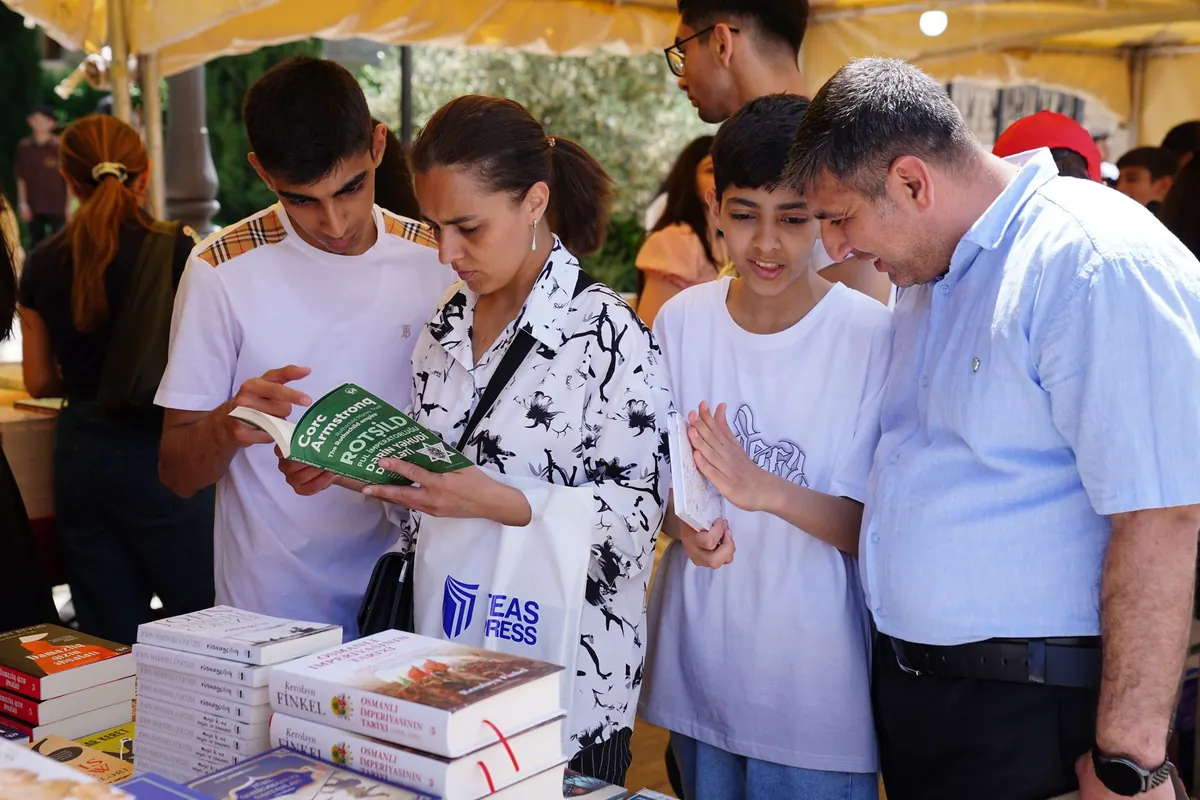
Photo: Tahir Xəlfəquliyev / Pexels